Frenchman's Bay Garage Door ServicesService bulletin 1 of 3
Garage Door Opener Diagnosis and Repair: step by step
Think of a command travelling through the system.
Toronto, Ontario · Garage Doors · open 24/7
Think of a command travelling through the system. Your thumb presses a button; the radio signal reaches the receiver; the logic board decides to move; the motor turns; a gear drives a chain, belt or screw; the trolley pulls the arm; the arm moves the door. A fault at any link produces the same result from where you stand: nothing happens. Diagnosis walks that chain in order and finds the broken link, whether it is a flat remote battery at the start or a stripped gear in the middle. Working from one end keeps the fix small and the explanation simple.
The door by itself
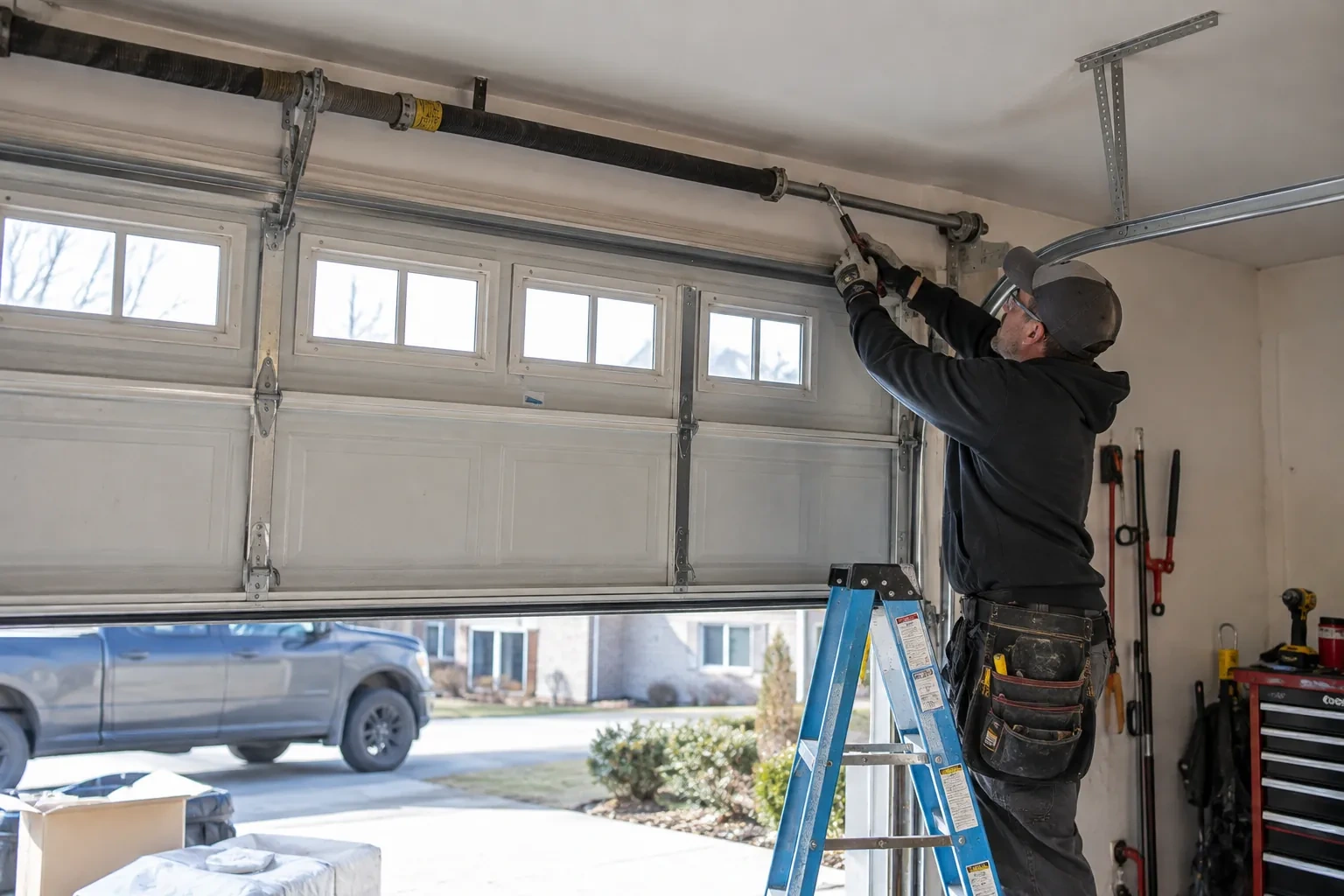
With the door fully closed, the technician pulls the emergency release and lifts the door by hand. A healthy door rises smoothly with modest effort, holds still about a metre off the floor, and stays up when fully open. If it is heavy, drifts down, or stays put only at the top, the springs are tired or broken and the opener has been doing work it was never sized for. Tracks, rollers, hinges, cables and drums are looked over at the same time. This check comes before any powered testing, because a door in this state is corrected on the door side first, by someone with the tools for tensioned hardware.
Sensor alignment and replacement
Photo eyes are brought back into service by fixing what actually broke. A bent bracket is straightened and re-secured so the two lenses face each other at the same height; dirty or frosted lenses are cleaned; a receiving eye blinded by low winter sun gets a shade, or the pair is swapped side to side. Wire that has been stapled through, chewed or pulled from its terminals is re-run with fresh bell wire, clipped clear of the track. When a sensor's electronics have failed, the pair is replaced together with units made for that opener, then the beam test is repeated to prove the circuit closes and the door reverses.
A clear path if the unit is near its end
When the diagnosis finds an opener that is safe today but not for long, you leave with a plan rather than a surprise. You know which part is wearing, what the warning signs will be, and how the decision to replace is likely to present itself. If the unit is one the industry recommends replacing, such as a head unit with no photo eyes, that is set out plainly along with what a modern belt or direct-drive unit changes: quieter running, battery backup, soft start and stop, and sensors that meet the current standard. The door is left working and safe while you decide.