Book soon Repairs · Toronto
Garage Door Panel Replacement
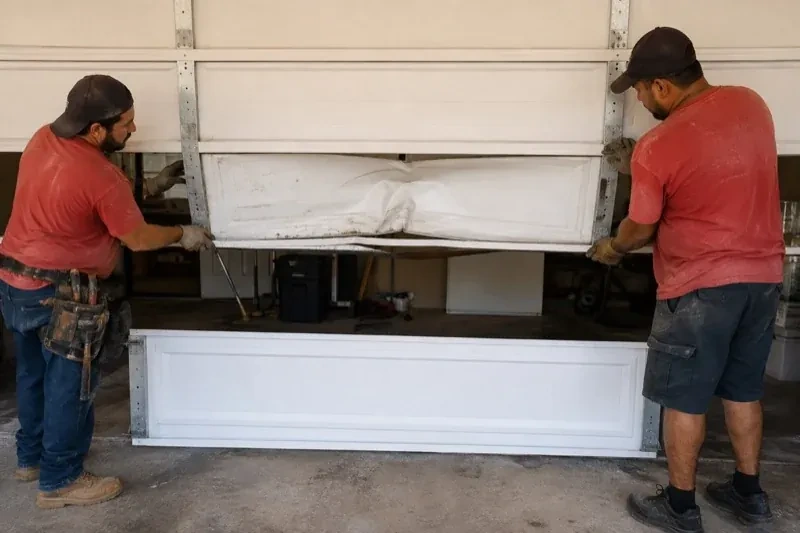
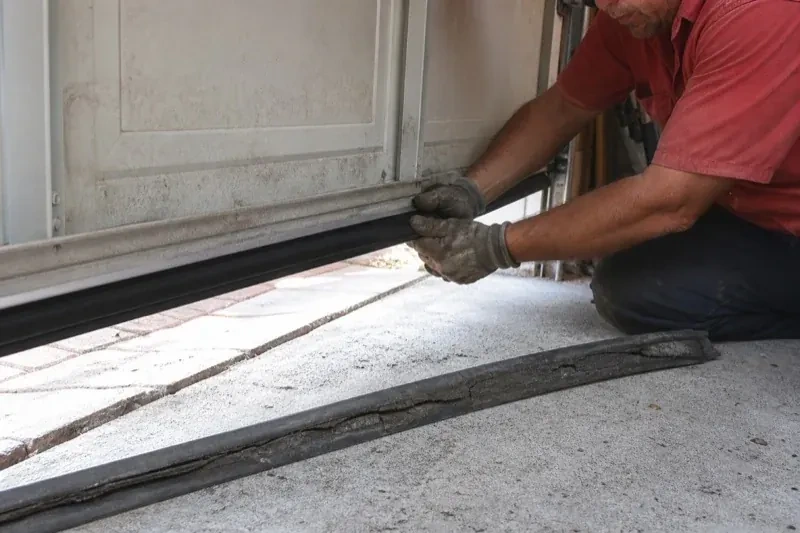
Rust has crept along the bottom edge of the lowest section. What began as bubbling paint is now a soft, flaking strip, the seal retainer is working loose, and a screwdriver pressed against the worst spot goes through the steel.
Call now · open 24/7(289) 301-8323Right now
Before the door is looked at
Call (289) 301-8323, open 24/7.
Use the lift handles or safe gripping points when a door must be moved by hand, never the gaps between sections, which close with real force.
In freezing weather, check that the bottom seal has released from the slab before using the opener; a door frozen to the floor is the most common winter route to slack cables and a crooked door.
In plain words
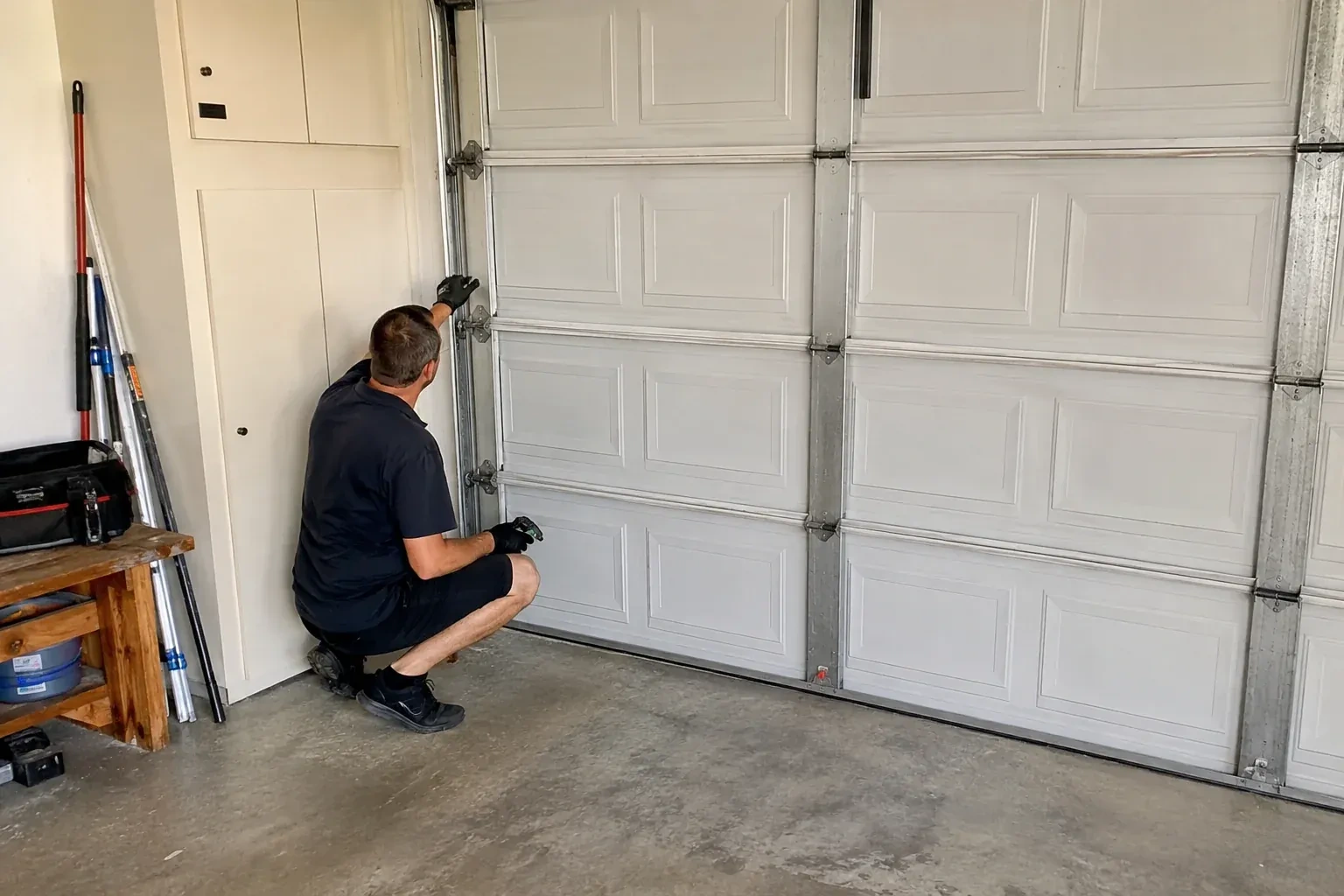
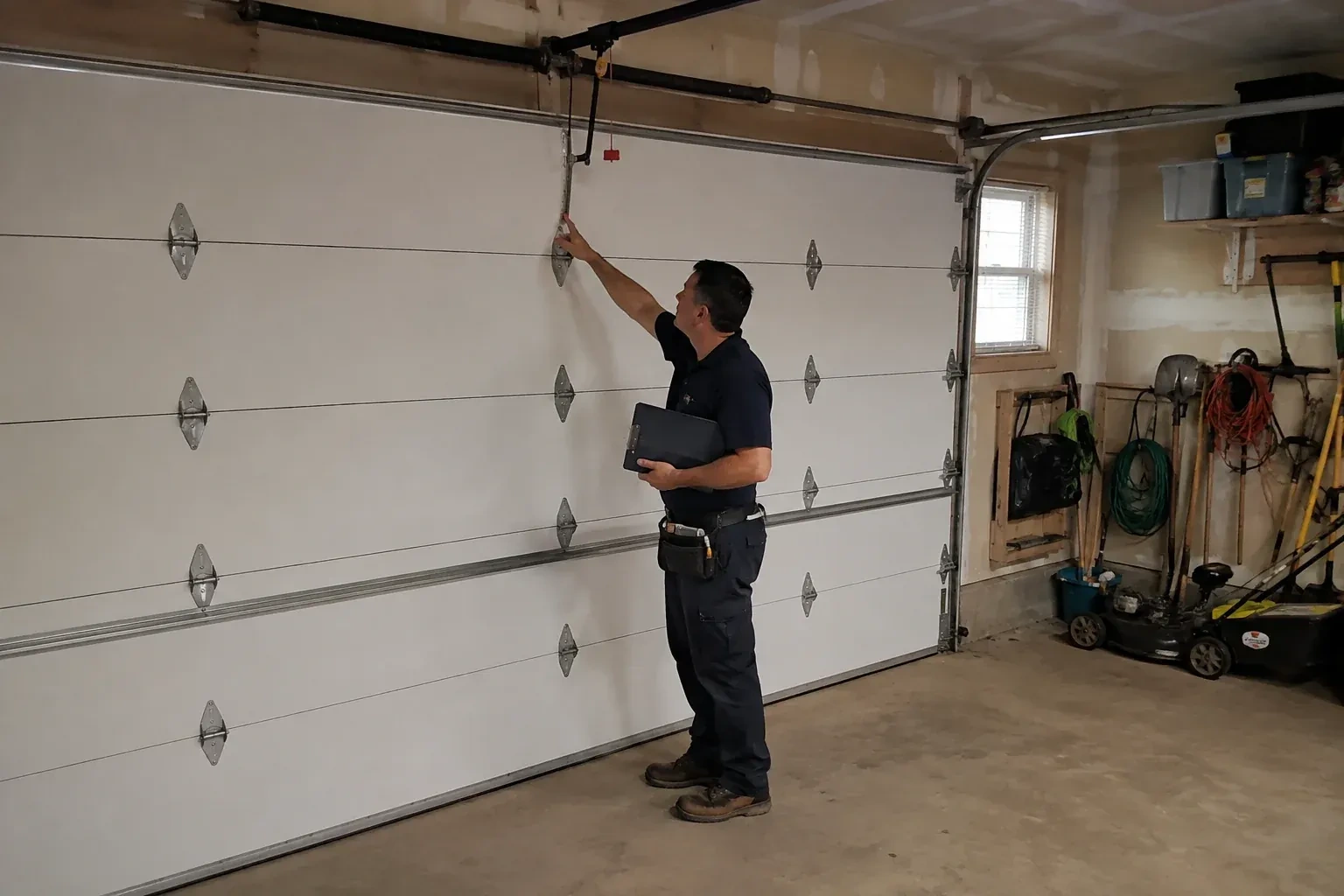
Everything about a section replacement flows from knowing exactly which door you have. Two doors that look alike from the driveway can differ in section height, thickness, the shape of the joint where sections meet, where the hinges bolt on and how the skin is embossed. A new section has to share all of those details to seat cleanly against its neighbours. So the visit starts with a hunt for the manufacturer's label, usually on the edge of a section or on the track, followed by measurements and photographs. With that identity confirmed, the right section can be ordered with confidence rather than hope.
How the visit goesRust has crept along the bottom edge of the lowest section. What began as bubbling paint is now a soft, flaking strip, the seal retainer is working loose, and a screwdriver pressed against the worst spot goes through the steel.
Garage Door Panel Replacement · Toronto
How the visit goes
- 1
Mapping the damage on the section
Where a dent sits matters as much as its size. A shallow dish in the middle of the skin is one thing; a crease that runs to the joint, a fold at an end stile, or a bend through a hinge point is another, because those areas carry the door's load as it moves. The technician records the depth of the damage, whether the inner skin or backer is affected, whether a strut has kinked and whether the section still lies flat when the door is closed. That map decides between working the dent out, replacing the single section, or looking harder at the rest of the door.
- 2
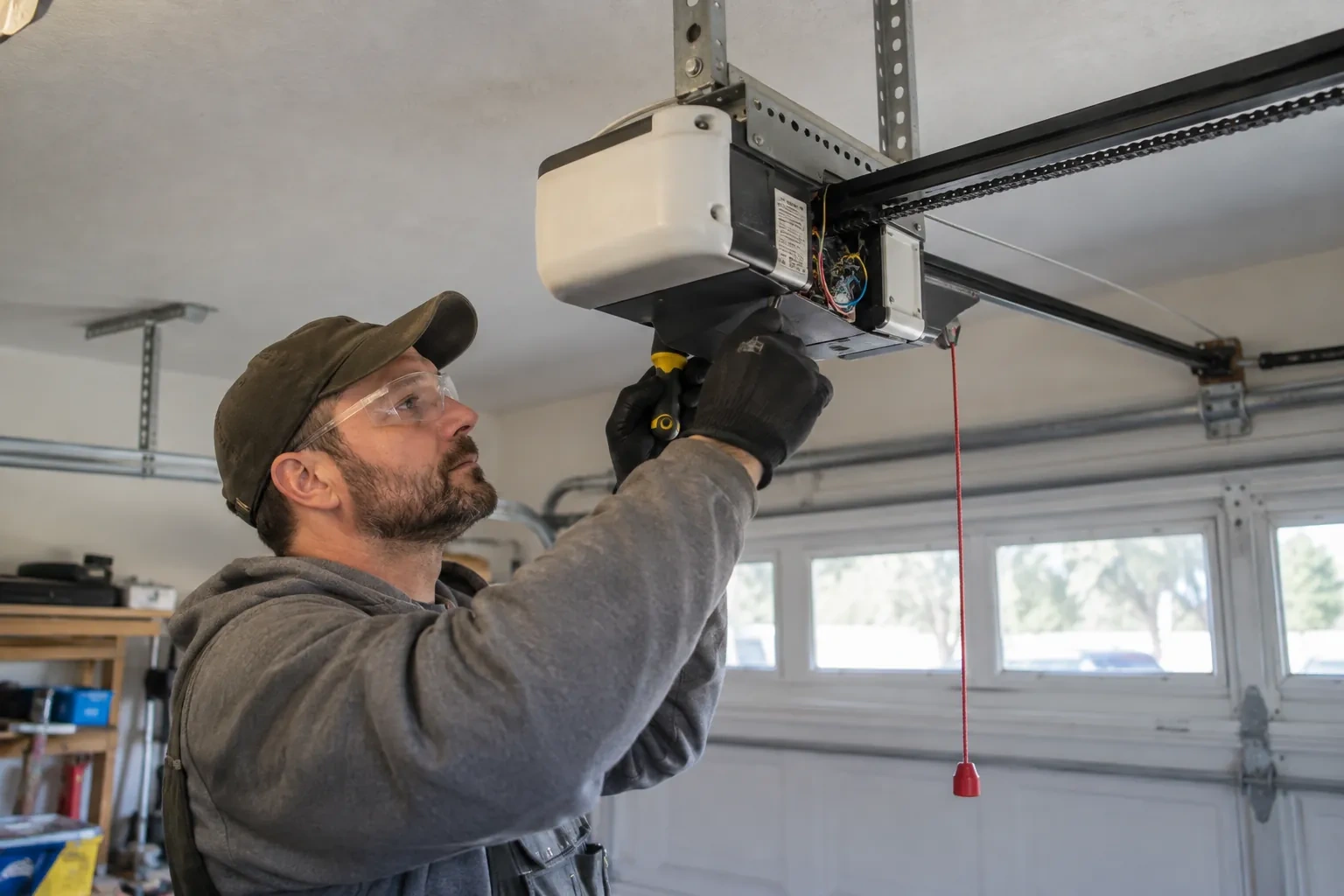
Opener limits, force and the reversal test
Only after the door runs correctly by hand is the opener reconnected. The technician runs the door through several cycles, resetting the open and close limits so the door seals at the floor without straining, and adjusting the force setting so the opener stops and reverses when it meets resistance. The photo-eyes are checked for alignment and the reversal is tested with a board laid flat under the door. Hinges and rollers on the new section get a light coat of lubricant, every fastener is given a final check, and the door is left closed with the joints tight and the seal sitting flat.
- 3
Habits that keep sections out of harm's way
Most section damage comes from a handful of everyday moments, and small changes head them off. Wait until the door is fully open before pulling in or out; the sensor and lights on many openers make that easy to judge. Give the door a metre of clearance when parking a trailer or leaning bikes. If the driveway is the rink, a practice net or a sheet of plywood on the inside face of the lower sections takes the pucks instead of the steel. And if the door is ever struck, stop using it and have it looked at, because the visible dent is not always the whole story.
In the van
- Bottom brackets with cable tabs
- Adjustable top roller brackets
- Nylon or steel rollers
- Self-tapping stile screws
- Garage-door lubricant
What affects the quote
- 1
A make-safe visit while the section is on order
When the door has to be braced, disconnected or secured closed until the section arrives, that first visit is quoted as its own item, with the installation visit following once the part is in.
- 2
Construction and insulation
An uninsulated steel section, a polystyrene-cored section and a polyurethane-injected section with a steel backer are different products, and the replacement has to match the construction the door already has, which sets the part's line on the quote.
- 3
Reinforcement struts
If the section had a strut that bent, or if a top or wide section is to gain one it never had, the strut and its fasteners appear as their own line on the quote.
Same fees day, night or weekend.
Garage Door Panel Replacement: questions
How should I look after the door after the section is replaced?
A little routine goes a long way. Each month, look along the hinges for loose screws, spin the rollers, and check the door's balance by lifting it by hand with the opener disconnected. Twice a year, apply a light garage-door lubricant to hinge pivots, roller stems and springs, and keep the tracks clean and dry. Rinse salt off the lower sections in spring, touch up chips, and keep the bottom seal clear of ice in winter.
Does changing a section affect the springs or balance?
It can. A new section may be a little heavier or lighter than the old one, particularly if insulation, glazing or a strut differs, and the springs are set for the door's actual weight. After the exchange the technician lifts the door by hand with the opener disconnected and adjusts the spring tension until it holds steady at mid-height. On a bottom-section job the springs are unloaded and reloaded as part of the work anyway.
Can one damaged section be replaced without replacing the whole door?
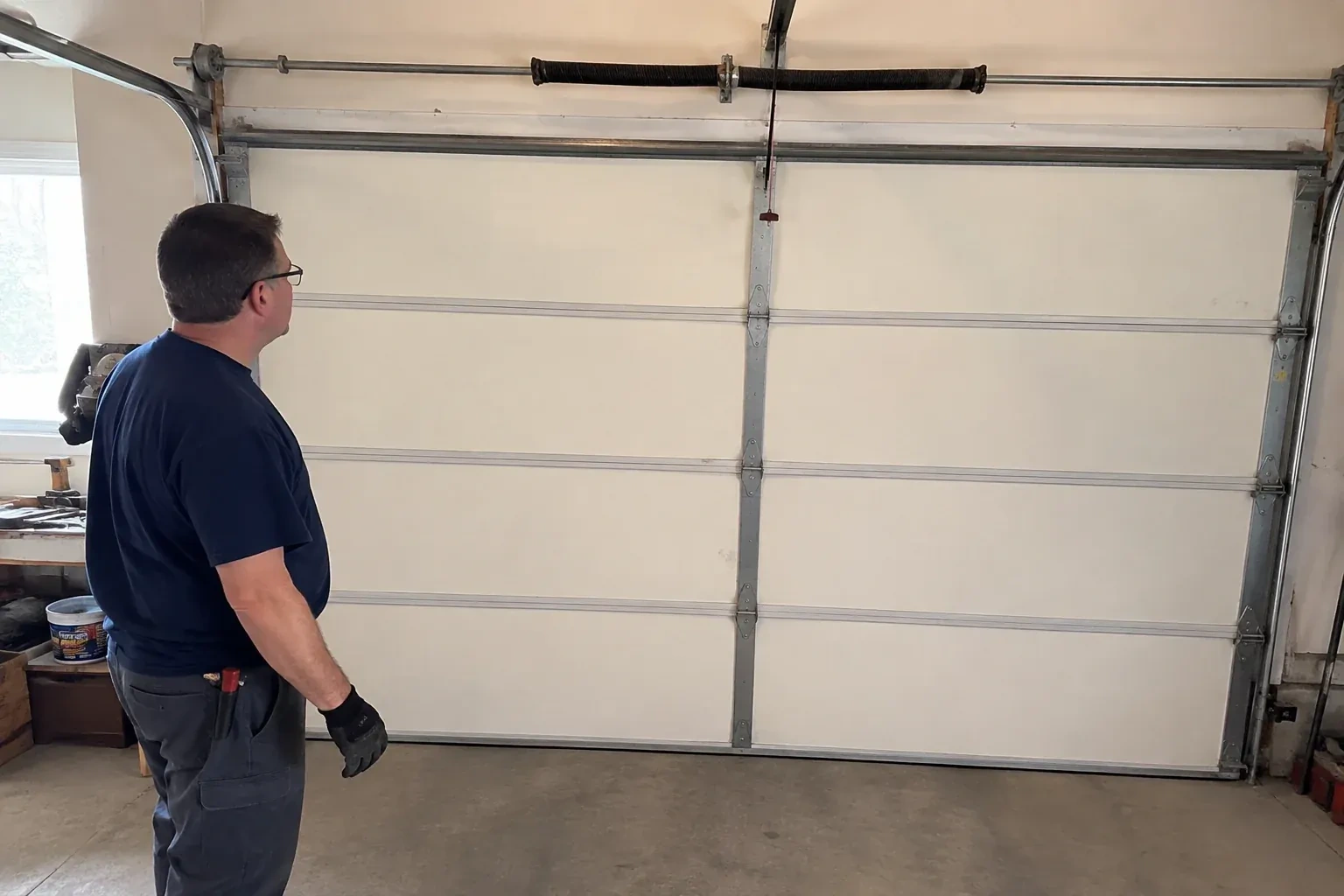
Usually, yes. A sectional door is built from separate sections joined by hinges, so a single creased, rusted or cracked section can be unhinged and exchanged while the others stay in place. The conditions are that a section for your make, model and size is still available and that the rest of the door and its hardware are in good order. When damage spans several sections or the design is discontinued, a full door is compared alongside.
Repair & Maintenance
Bigger photo, sooner job: Emergency Book soon Plan ahead
Garage Door Panel Replacement near you
Toronto, Ontario
Toronto information
- Town
- Toronto, Ontario
- In business
- 19 years
- Hours
- Open 24/7 · nights, weekends and holidays, same fees
- Phone
- (289) 301-8323
- Visits
- On-site assessment preferred. Request a visit or call.
What the census means at the door
58%
Older homes. About 58% of homes in Toronto were built in 1980 or earlier, according to the 2021 Census.
Wood door frames in an older house settle and swell over the decades, which can leave a door rubbing on one side. Rather than forcing the opener, the technician trues the tracks, adjusts the jamb seals and sets the door so it travels freely again.
23%
Single-detached houses make up about 23% of homes in Toronto (2021 Census).
Where most homes are townhouses, condos or apartments, garage doors are often shared: a single overhead door or gate serving an underground or common garage. Those doors run on commercial operators built for constant use, and their upkeep is usually arranged through the building's management.
Nearby
Open 24/7
Request a visit
Rust has crept along the bottom edge of the lowest section.
Call now · open 24/7(289) 301-8323- On-site assessment preferred
- Same fees day, night or weekend
- 19 years in business