Book soon New Doors · Toronto
Commercial Sectional Door Repair
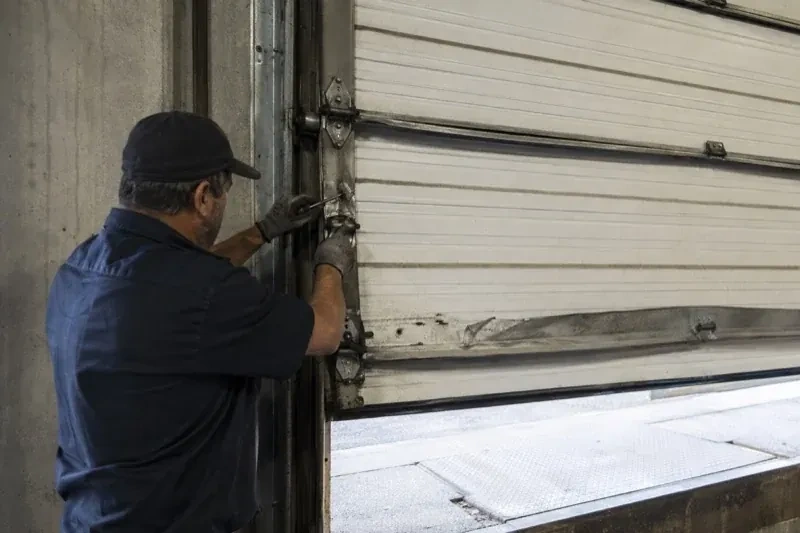
The loading-bay door rises with one side several centimetres lower than the other. A lift cable looks slack, the bottom section sits crooked, and staff have stopped using the opening until the door can travel level again.
Call now · open 24/7(289) 301-8323In plain words
When a bay door hangs crooked, the visible angle is often only the starting clue. A technician compares cable tension on both sides, checks how each cable sits on its drum, examines bottom fixtures and looks for a shifted track or damaged roller. The door is supported before tensioned parts are handled. Once the cause is corrected, the cables are seated, the door is levelled and balance is checked through travel. Powered limits and protective devices are tested afterwards, because the operator depends on a mechanically sound door.
How the visit goesA forklift clipped the bottom panel while backing through the bay. The section is creased near an end stile, the lower roller rubs the track, and daylight now shows along one corner when the door closes.
Commercial Sectional Door Repair · Toronto
How the visit goes
- 1
Testing protective controls
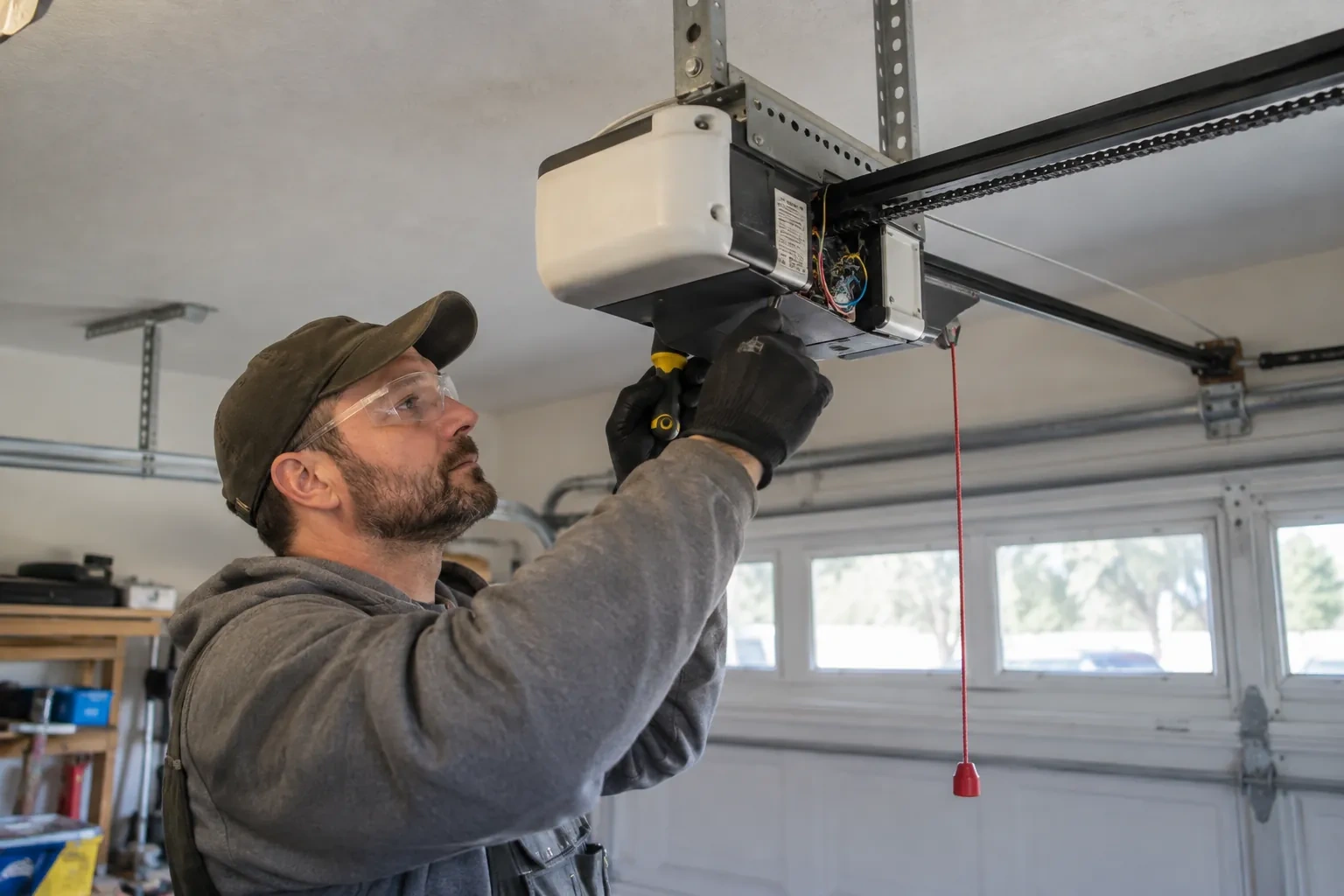
A reversing complaint begins with the travel area and installed protection devices. Photoelectric sensors are checked for alignment, secure mounting, clean lenses and intact wiring. A sensing edge is examined for distortion, connection faults and consistent response along the bottom of the door. The control station, stop circuit and operator indicators add context to the behaviour. Mechanical resistance is checked as well, since a binding door can affect powered movement. This combined assessment identifies whether service belongs at a sensor, its circuit, an operator setting or the moving door itself.
- 2
Controlling the door before repair
Work begins by separating the bay from normal traffic and placing the door in the safest workable position for the identified fault. Electrical controls are isolated where the task calls for it, and the assembly is held with clamps, locking pliers or rated supports suited to its weight and track type. Stored spring force is managed with proper winding tools and a planned sequence. With movement controlled, hardware can be removed without letting a crooked section, slack cable or broken spring shift the rest of the system.
- 3
A clear opening and shared operating habits
Repair restores the equipment, while everyday habits help preserve it. Marked stand-off areas give vehicles room to clear the bottom section and vertical tracks. Loads are staged beyond the door path, control stations remain visible, and staff wait for the opening to reach its operating position before passing through. The threshold is kept free of packaging, ice and debris. When everyone knows which sound, movement or sensor indication to report, small changes are documented clearly and the door can be assessed with useful evidence rather than a vague description.
In the van
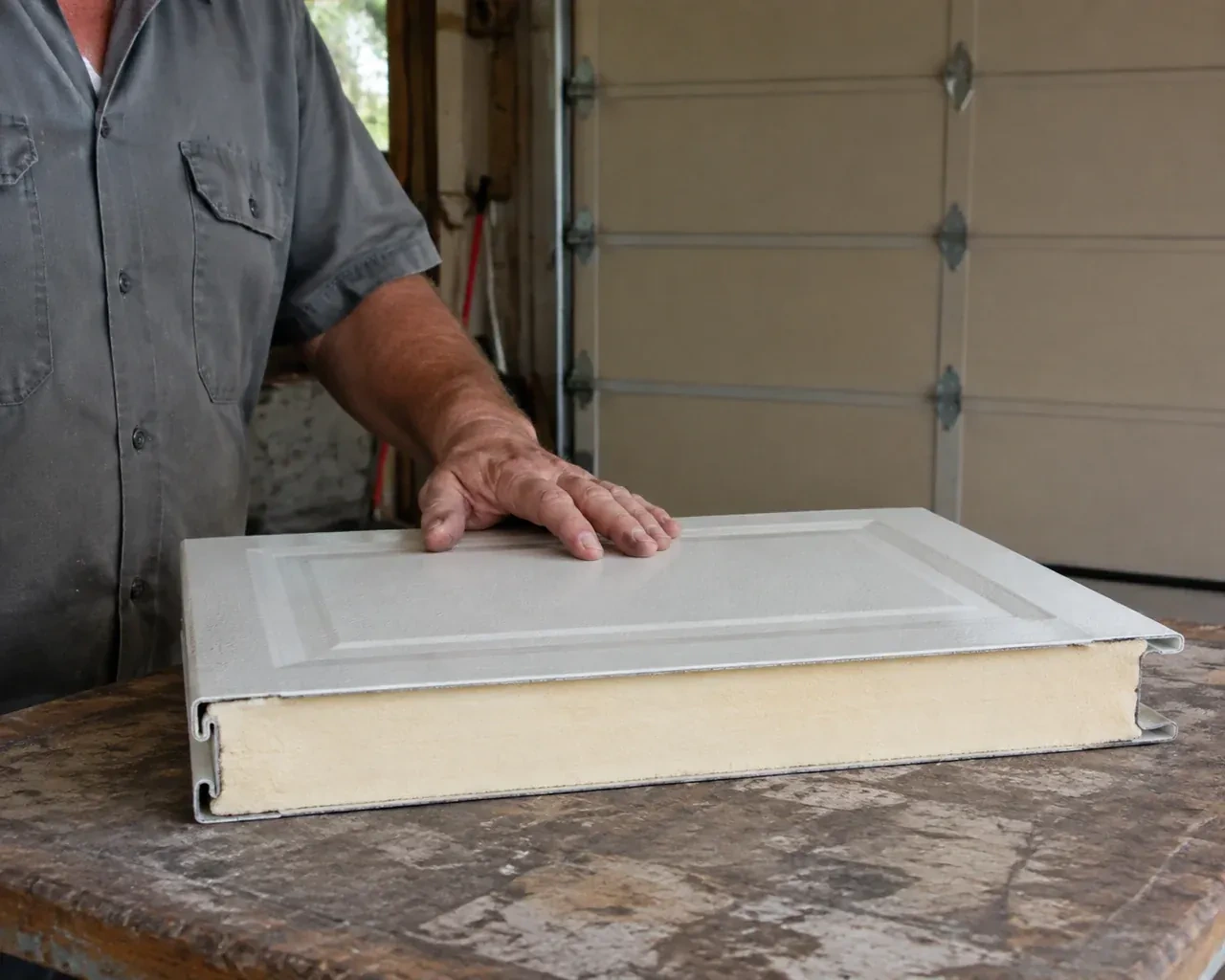
- Commercial door sections
- Bottom fixtures
- Numbered end hinges
- Bottom seal and retainer
- Torsion springs
What affects the quote
- 1
Counterbalance components involved
Spring count, shaft arrangement, drum type, cable dimensions, bearings and bottom fixtures determine which tensioned parts must be controlled, replaced and reset together.
- 2
Position of the stopped door
A door resting closed, hanging partly open or displaced from its tracks requires a different stabilization plan before repair work and component removal can begin.
- 3
Number of affected openings
A single bay with one defined fault differs from a facility request covering several numbered doors, separate symptoms and individual operational tests.
Same fees day, night or weekend.
Commercial Sectional Door Repair: questions
What causes a commercial sectional door to become noisy?
Common sources include roller-bearing wear, loose hinges, dry pivots, a rubbing panel, track movement, shaft-bearing wear and operator-chain vibration. The point in the cycle where the sound occurs helps isolate it. A technician watches and listens during controlled travel, looks for play or contact marks, and services the component creating the repeatable noise.
What can staff prepare before the repair visit?
Clear vehicles, pallets and stored materials from both sides of the opening and arrange another traffic route. Have the door number, model information, control location and service record available if possible. Note where in the cycle the symptom occurs and whether there was an impact or recent change. Access to the electrical isolation point may also be needed.
Can bent track be straightened or must it be replaced?
That depends on the location and degree of deformation. A minor change in an accessible straight section may be corrected while restoring spacing and support. A sharply creased rail, damaged curve, opened seam or track that can no longer hold the roller securely usually calls for a compatible replacement. Brackets, anchors and adjoining track are checked either way.
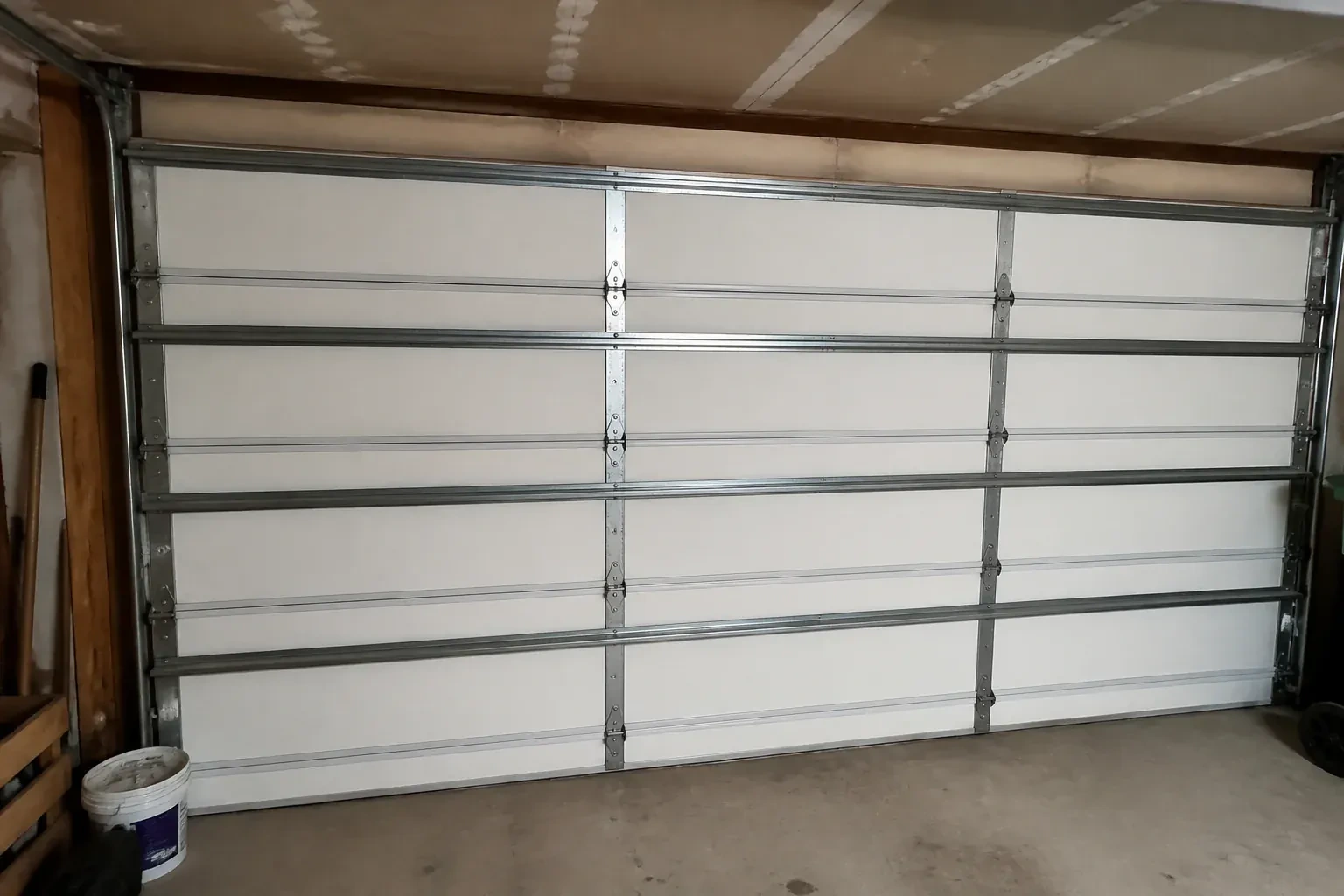
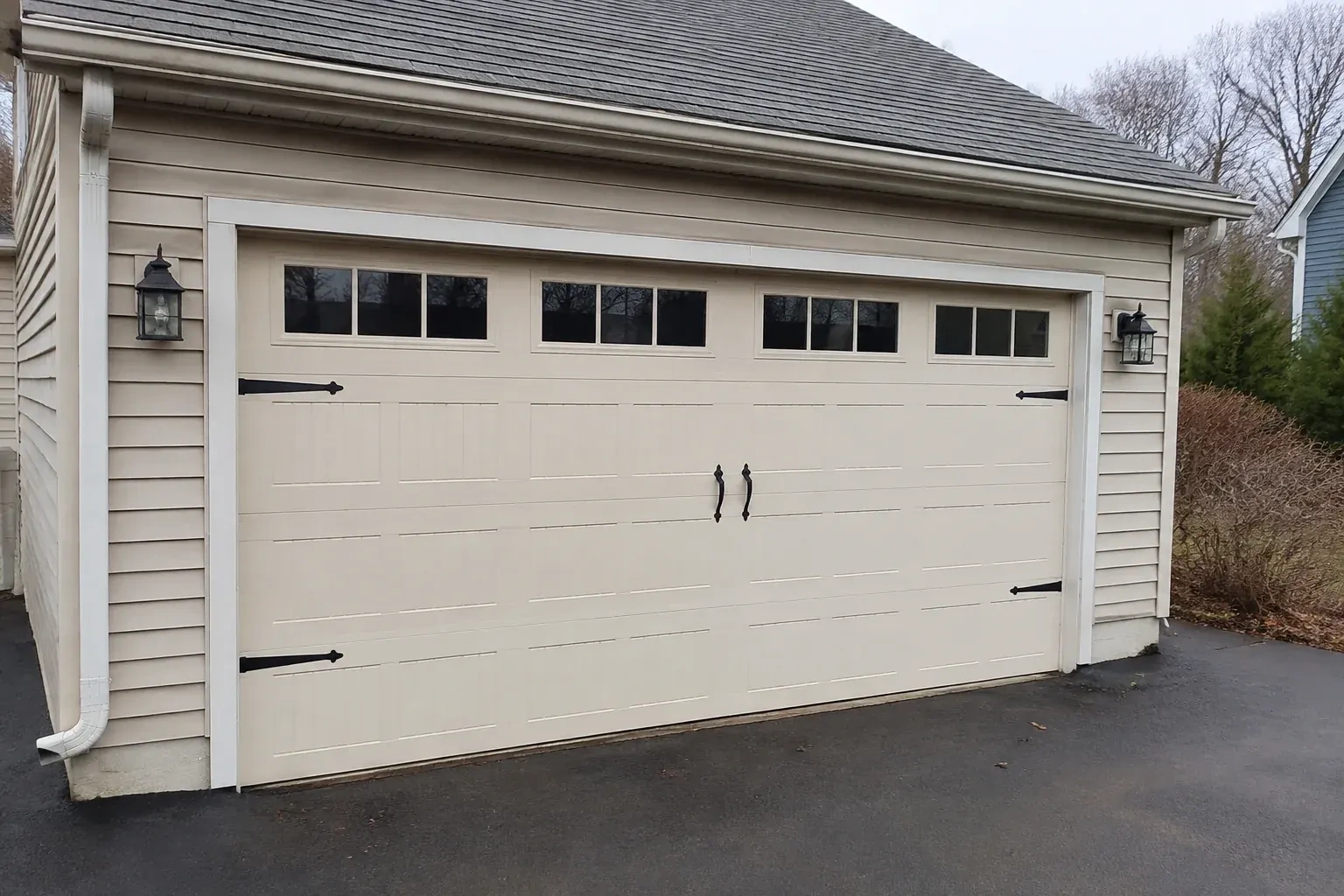
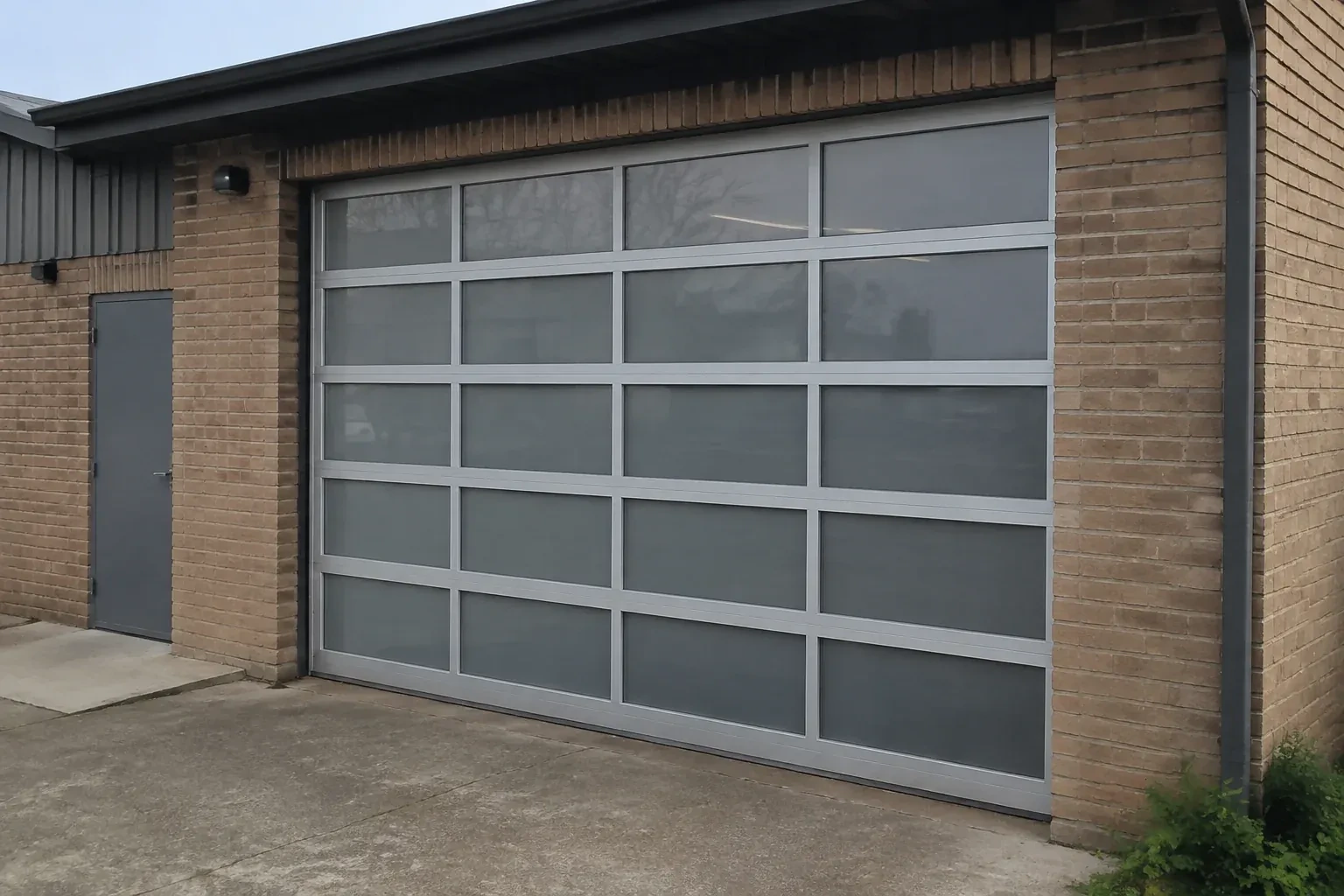
Commercial Sectional Door Repair near you
Toronto, Ontario
Toronto information
- Town
- Toronto, Ontario
- In business
- 19 years
- Hours
- Open 24/7 · nights, weekends and holidays, same fees
- Phone
- (289) 301-8323
- Visits
- On-site assessment preferred. Request a visit or call.
What the census means at the door
58%
Older homes. About 58% of homes in Toronto were built in 1980 or earlier, according to the 2021 Census.
Wood door frames in an older house settle and swell over the decades, which can leave a door rubbing on one side. Rather than forcing the opener, the technician trues the tracks, adjusts the jamb seals and sets the door so it travels freely again.
23%
Single-detached houses make up about 23% of homes in Toronto (2021 Census).
Where most homes are townhouses, condos or apartments, garage doors are often shared: a single overhead door or gate serving an underground or common garage. Those doors run on commercial operators built for constant use, and their upkeep is usually arranged through the building's management.
Nearby
Open 24/7
Request a visit
The loading-bay door rises with one side several centimetres lower than the other.
Call now · open 24/7(289) 301-8323- On-site assessment preferred
- Same fees day, night or weekend
- 19 years in business