Emergency Springs · Toronto
Garage Door Cable Replacement
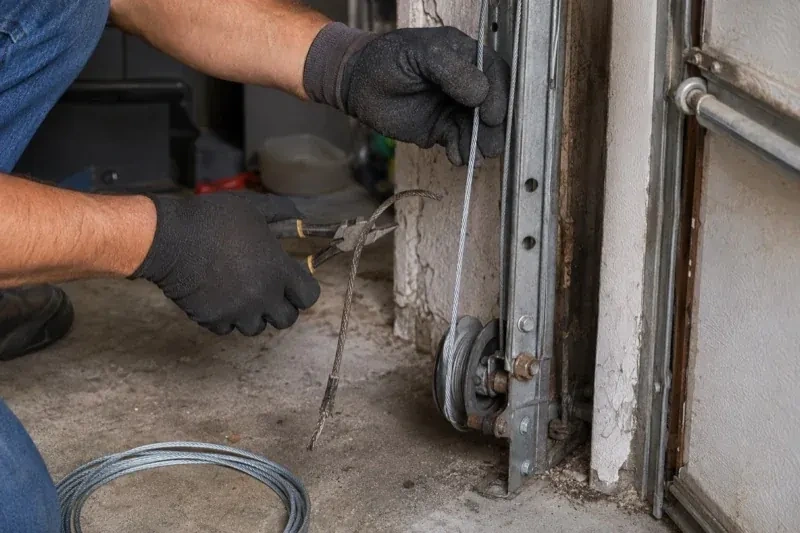
There was a sharp crack from the garage, and when you went to look the door had dropped on one side and jammed. A length of cable lies coiled on the floor by the bottom roller.
Call now · open 24/7(289) 301-8323Right now
Before the door is looked at
Call (289) 301-8323, open 24/7.
Never run the opener on a door that is off its track or hanging crooked; every cycle drives the racked door harder into the rails and can pull the track from the wall or tear a hinge.
Pull the manual release only when the door is fully closed unless a technician asks otherwise; a door disconnected while partly open can move on its own if the springs are out of balance.
In plain words
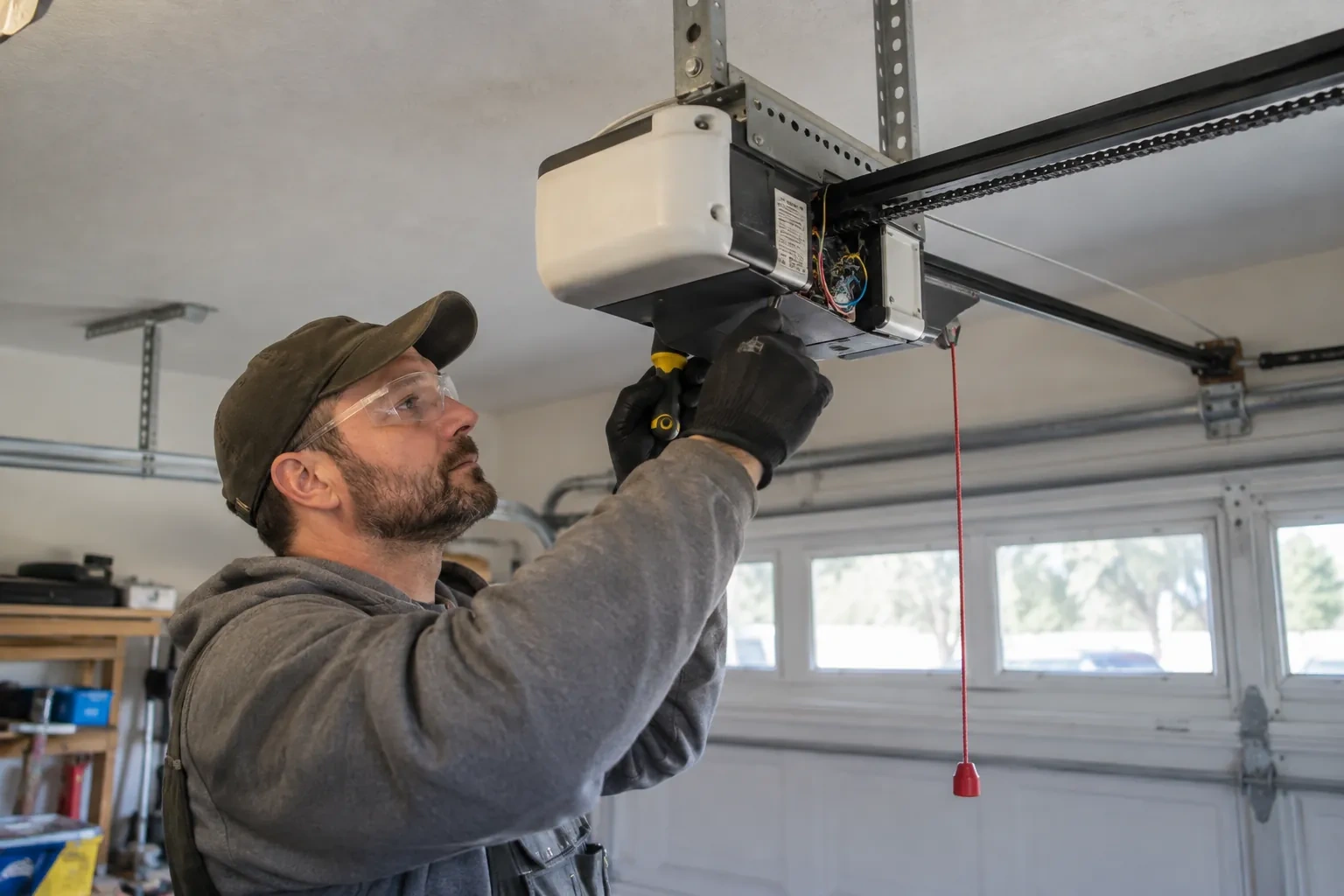
Which counterbalance your door has shapes the job. Torsion doors carry a spring on a shaft above the opening, and the cables wind onto grooved drums at each end; the technician winds the spring down with steel bars, swaps the cables, sets the drums and winds it back up. Extension doors, common on older detached garages, run the cables over pulleys beside the horizontal tracks with a spring stretched behind each; here the door is opened and clamped so the springs relax, then the cable is threaded, adjusted at its clip and checked against its containment cable. Either way, the service ends with a balanced door.
How the visit goesStanding inside with the door closed, you notice the cable on the right side near the floor has gone fuzzy. A handful of broken wires stick out like a bottle brush and the steel underneath is brown.
Garage Door Cable Replacement · Toronto
How the visit goes
- 1
Bottom brackets and the pin the cable rides on
The bottom bracket in each corner anchors the cable and carries the bottom roller, and it lives in the wettest, saltiest spot on the door. The technician looks for bending from an impact, corrosion around the cable pin and the fasteners into the section, and a roller that has seized or lost its stem bearing. On many doors these brackets have tamper-resistant fasteners because they are under load whenever the springs are tensioned, so they are inspected as found and only removed once the counterbalance is unloaded. A bracket that is bent or rusted through is scheduled for replacement in the same visit so the new cable has a sound anchor.
- 2
Extension-spring doors: pulleys, clips and containment
On a door with springs along the tracks, the new cable is threaded from the bottom bracket up over the pulley at the front of the horizontal track, back to the pulley on the end of the spring, and forward to the adjusting clip on the track hanger. The technician replaces a pulley whose wheel is grooved or whose bearing has seized, since that is often what wore the cable, and checks the S-hooks and sheave forks. Each side is set to the same clip position so the door hangs level. A containment cable is confirmed through the centre of each spring and added if the door was never fitted with one.
- 3
A clear threshold
Most cables that jump their drums do so because the door came down on something. Keep the opening clear of bins, bikes and the snow shovel, and in winter clear the ridge of packed snow and ice that forms at the threshold before running the door. If the door does meet an obstruction and stops, leave it where it is rather than pressing the button again, since a second attempt is what turns a slack cable into a tangled one. The photo eyes near the floor should be clean and aligned so they catch anything in the path; a wipe with a soft cloth each season keeps them working.
In the van
- Bottom brackets with cable pin
- Track clamps or locking pliers
- Containment cables
- Silicone garage-door lubricant
- Galvanized aircraft-type lift cables
What affects the quote
- 1
Oversized, commercial or high-lift doors
Doors taller or wider than a standard residential opening, or fitted with high-lift hardware, use heavier cables and drums and take longer to set up, which the quote reflects.
- 2
Condition of the bottom brackets
A bracket bent by a bumper or corroded by years of salt is replaced while the system is unloaded. New brackets, roller and fasteners are listed as their own line.
- 3
Extension-spring pulleys and containment cables
On an extension door, pulleys with grooved wheels or seized bearings are replaced with the cable, and a containment cable is added where one is missing. Each is a small parts line.
Same fees day, night or weekend.
Garage Door Cable Replacement: questions
What stops the door from falling if a cable lets go?
It depends, and not reliably. The other cable and its spring may hold that corner so the door tips and wedges in the track rather than falling square, and the rollers binding can add some resistance, but neither is dependable: the door can still drop unexpectedly on the failed side. Some doors also carry a broken-cable device on the bottom bracket that grips the track if a cable fails. Because the door may not be held at all, the technician clamps and supports it before doing anything else.
Can I lift the door by hand while a cable is off?
Leave it. With one cable slack the door is being carried on one side only, so it is unbalanced and may bind or drop unevenly when moved. The technician arrives with clamps and a method for taking the door's weight before anything is moved, and that is the moment to lift it. Until then a stationary door is exactly what you want.
How long do lift cables usually last?
Cables tend to live about as long as the springs they work with, often ten years or more on a door used a few times a day, and less on a door that sees heavy use or a wet, salty floor every winter. Rather than a calendar, watch the condition: fraying, rust near the loop or a slack side are the signs the set is due.
Springs & Hardware
Bigger photo, sooner job: Emergency Book soon Plan ahead
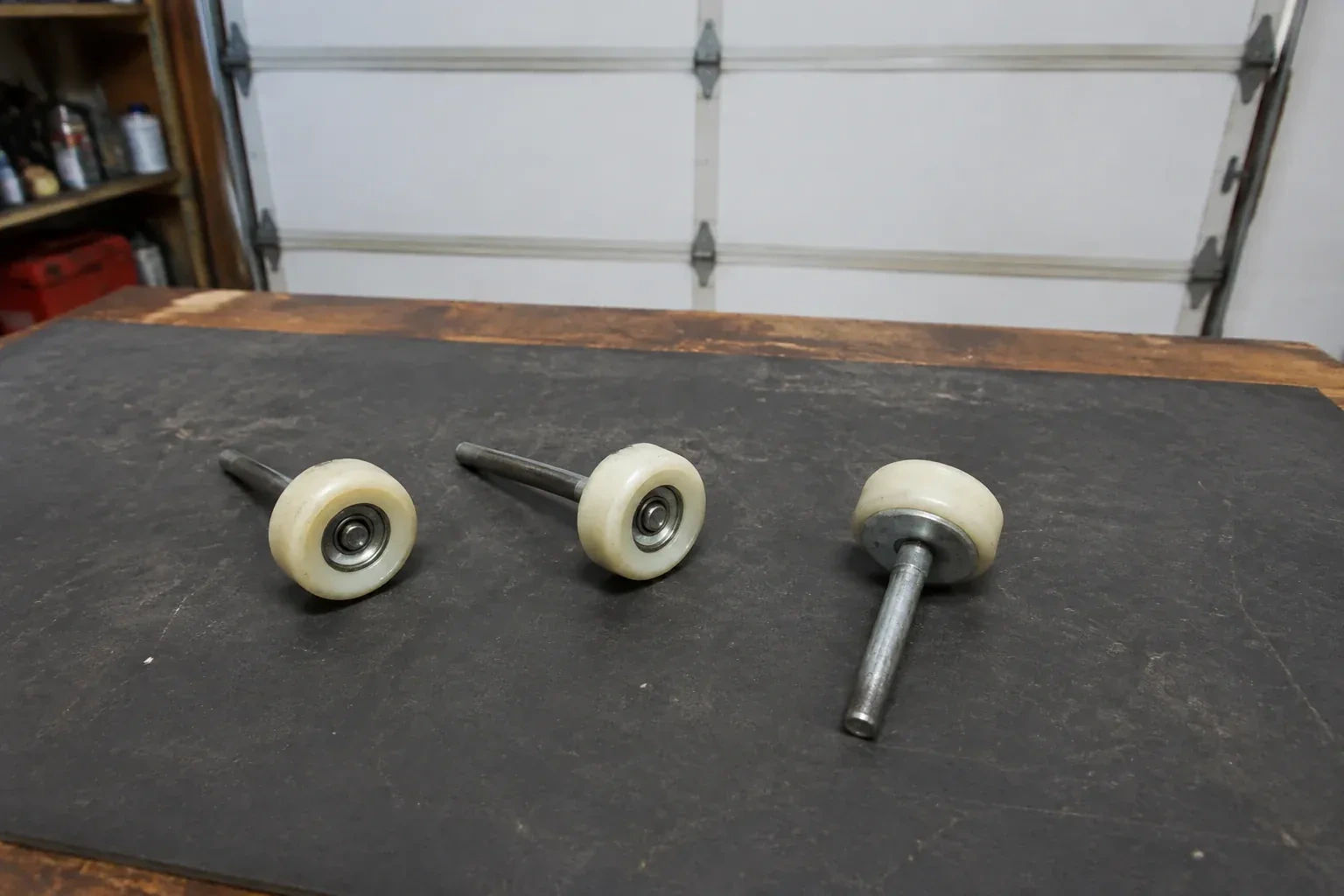 Book soonGarage Door Roller ReplacementNew springs went in last year and the door balances well, yet it still clicks along the ceiling track like a train over rail…
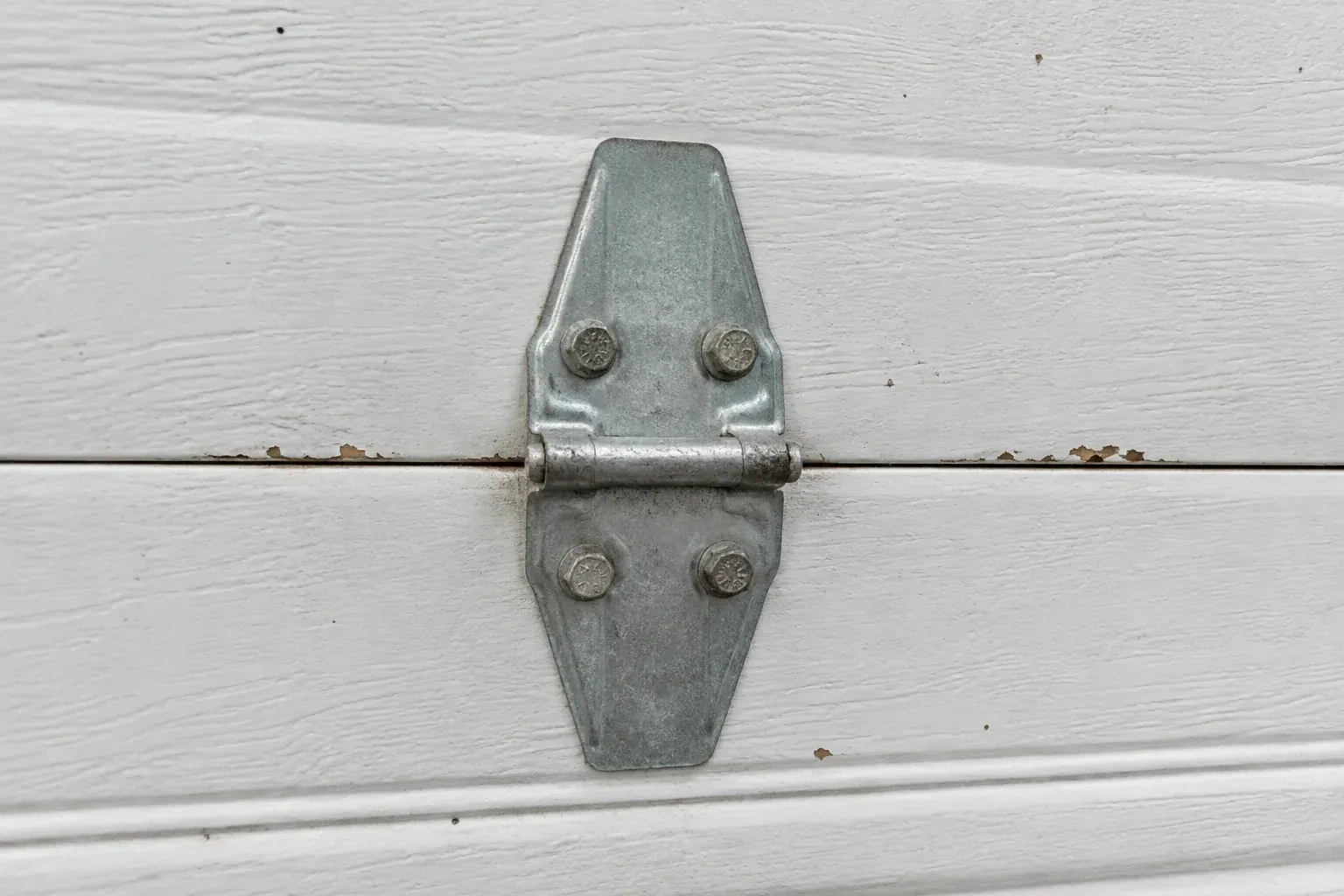 Book soonGarage Door Hinge ReplacementThe car nudged the door on the way in.
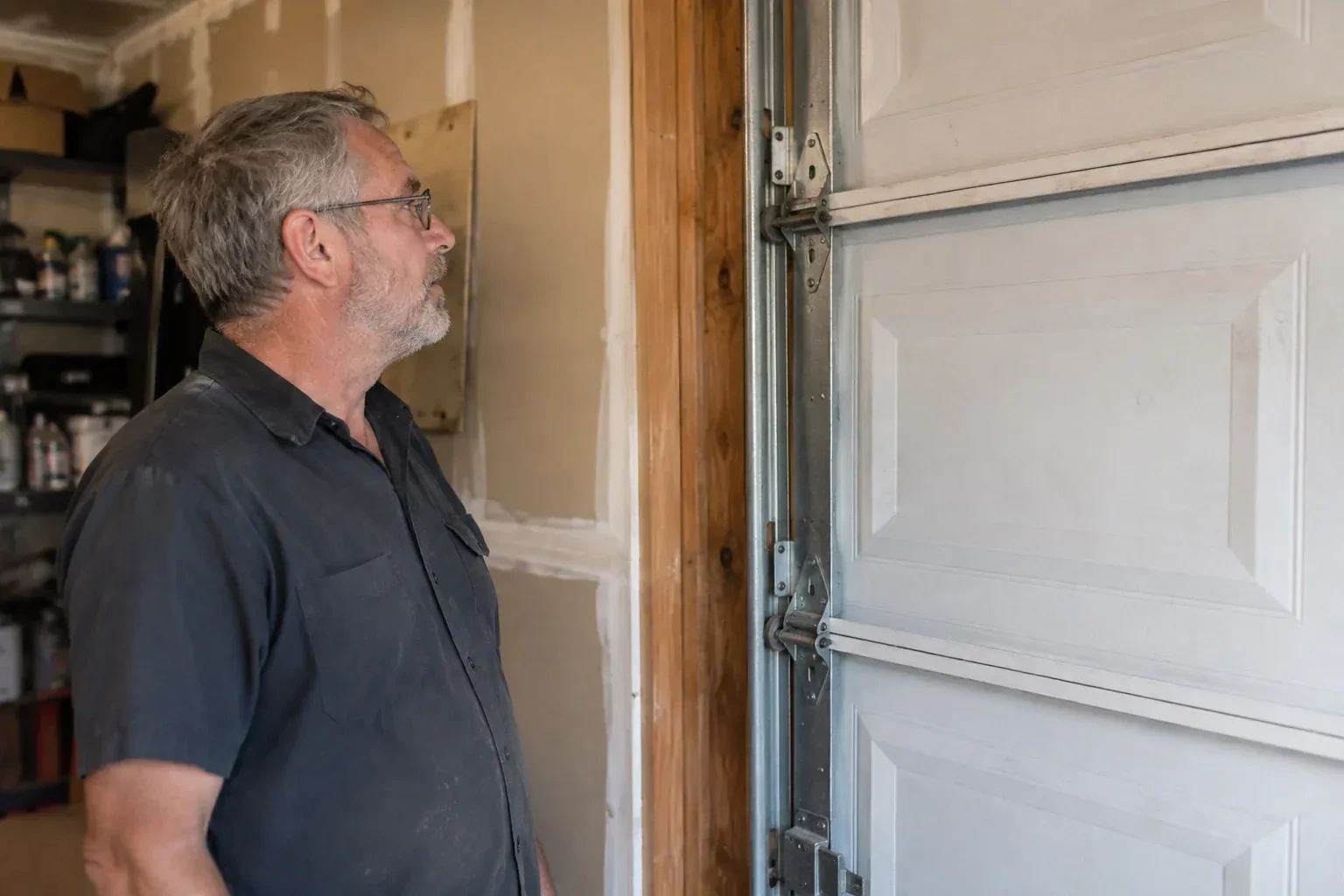 Book soonGarage Door Track Repair or ReplacementThe door has started rubbing the frame on the left, leaving a shiny stripe down the weatherstrip.
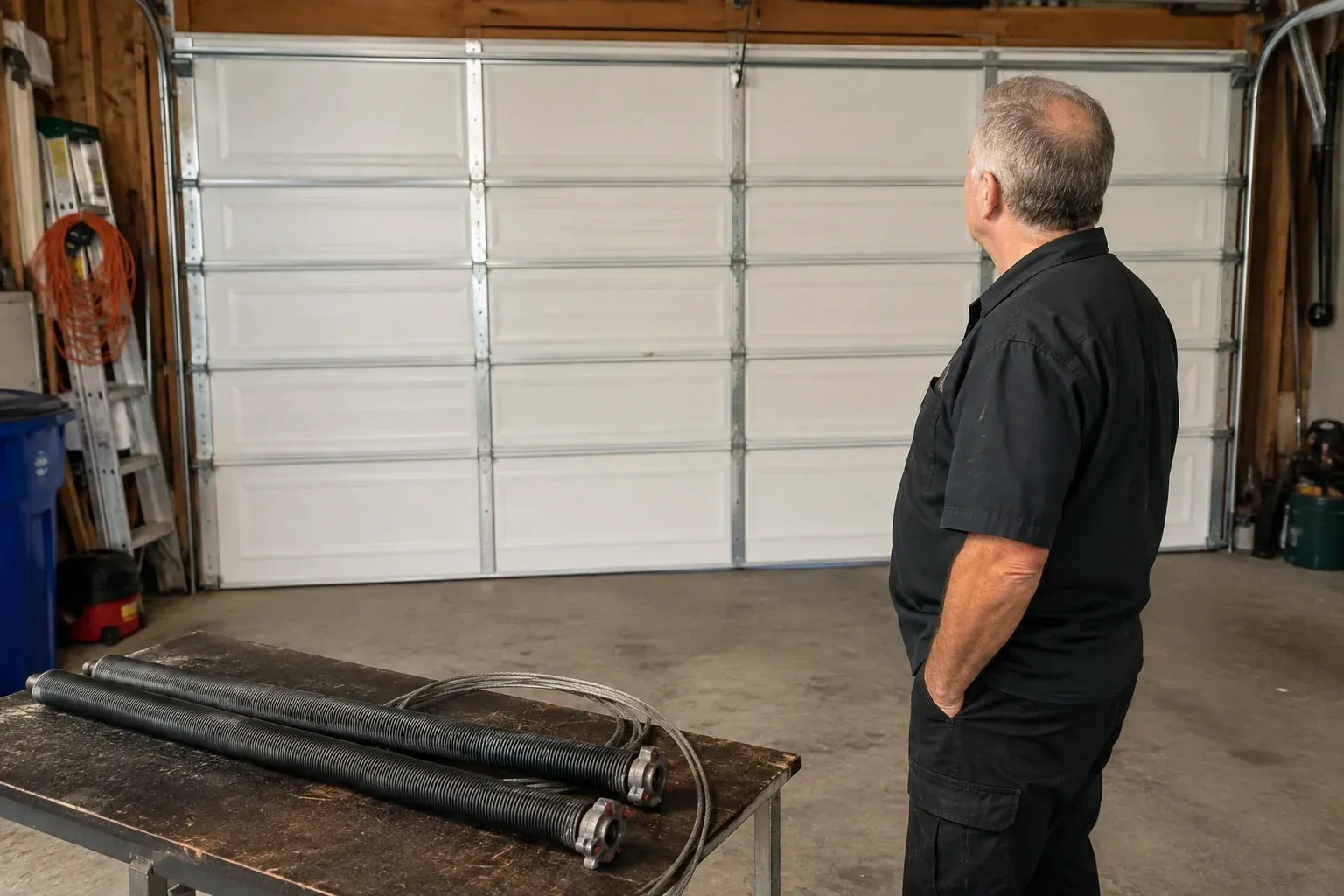 EmergencyTorsion Spring ReplacementThe door starts to rise, gets about the height of your knee, then shudders and reverses.
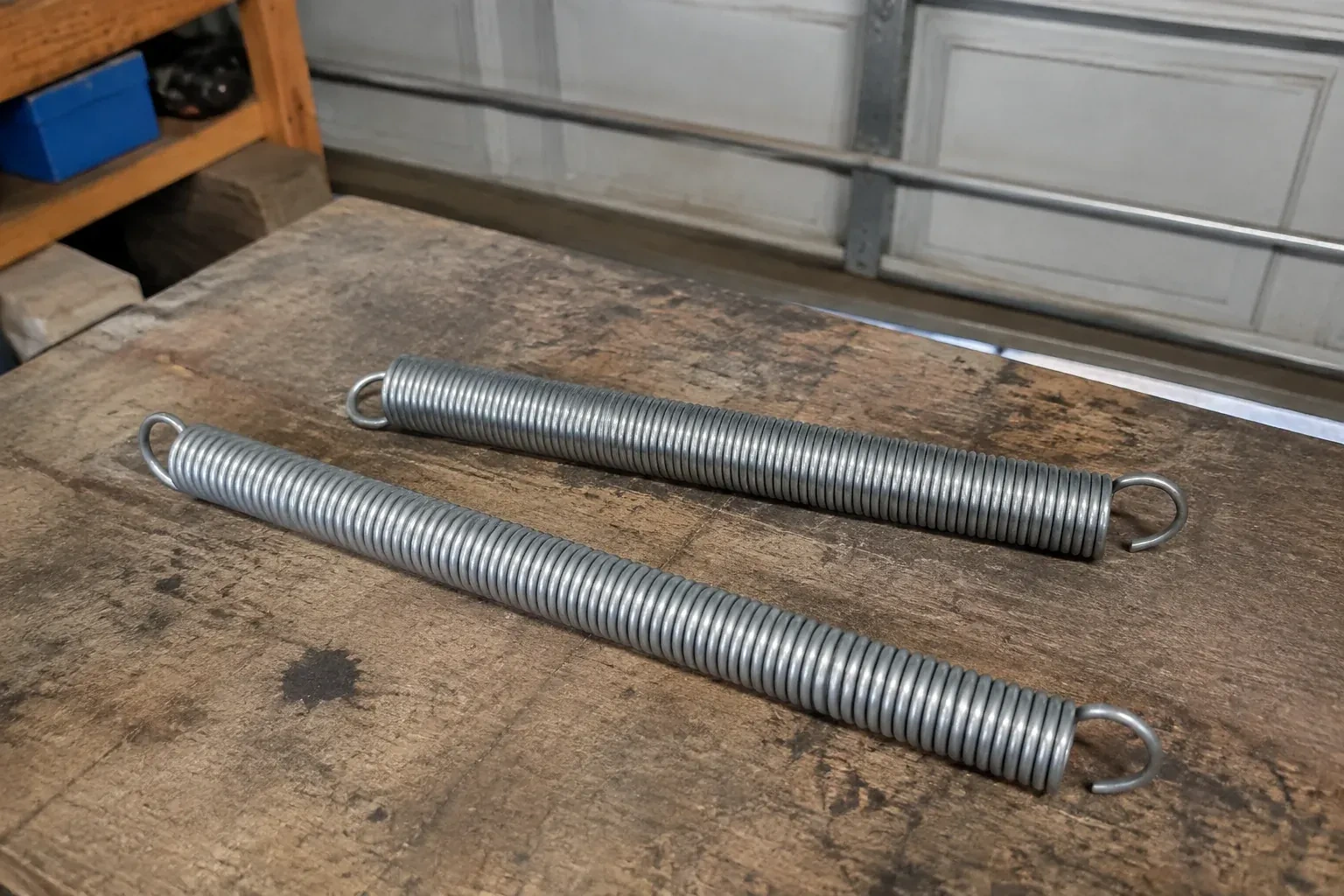 EmergencyExtension Spring ReplacementYou pulled the red cord to open the door during a power cut and it barely moved.
Garage Door Cable Replacement near you
Toronto, Ontario
Toronto information
- Town
- Toronto, Ontario
- In business
- 19 years
- Hours
- Open 24/7 · nights, weekends and holidays, same fees
- Phone
- (289) 301-8323
- Visits
- On-site assessment preferred. Request a visit or call.
What the census means at the door
58%
Older homes. About 58% of homes in Toronto were built in 1980 or earlier, according to the 2021 Census.
Wood door frames in an older house settle and swell over the decades, which can leave a door rubbing on one side. Rather than forcing the opener, the technician trues the tracks, adjusts the jamb seals and sets the door so it travels freely again.
23%
Single-detached houses make up about 23% of homes in Toronto (2021 Census).
Where most homes are townhouses, condos or apartments, garage doors are often shared: a single overhead door or gate serving an underground or common garage. Those doors run on commercial operators built for constant use, and their upkeep is usually arranged through the building's management.
Nearby
Open 24/7
Request a visit
There was a sharp crack from the garage, and when you went to look the door had dropped on one side and jammed.
Call now · open 24/7(289) 301-8323- On-site assessment preferred
- Same fees day, night or weekend
- 19 years in business